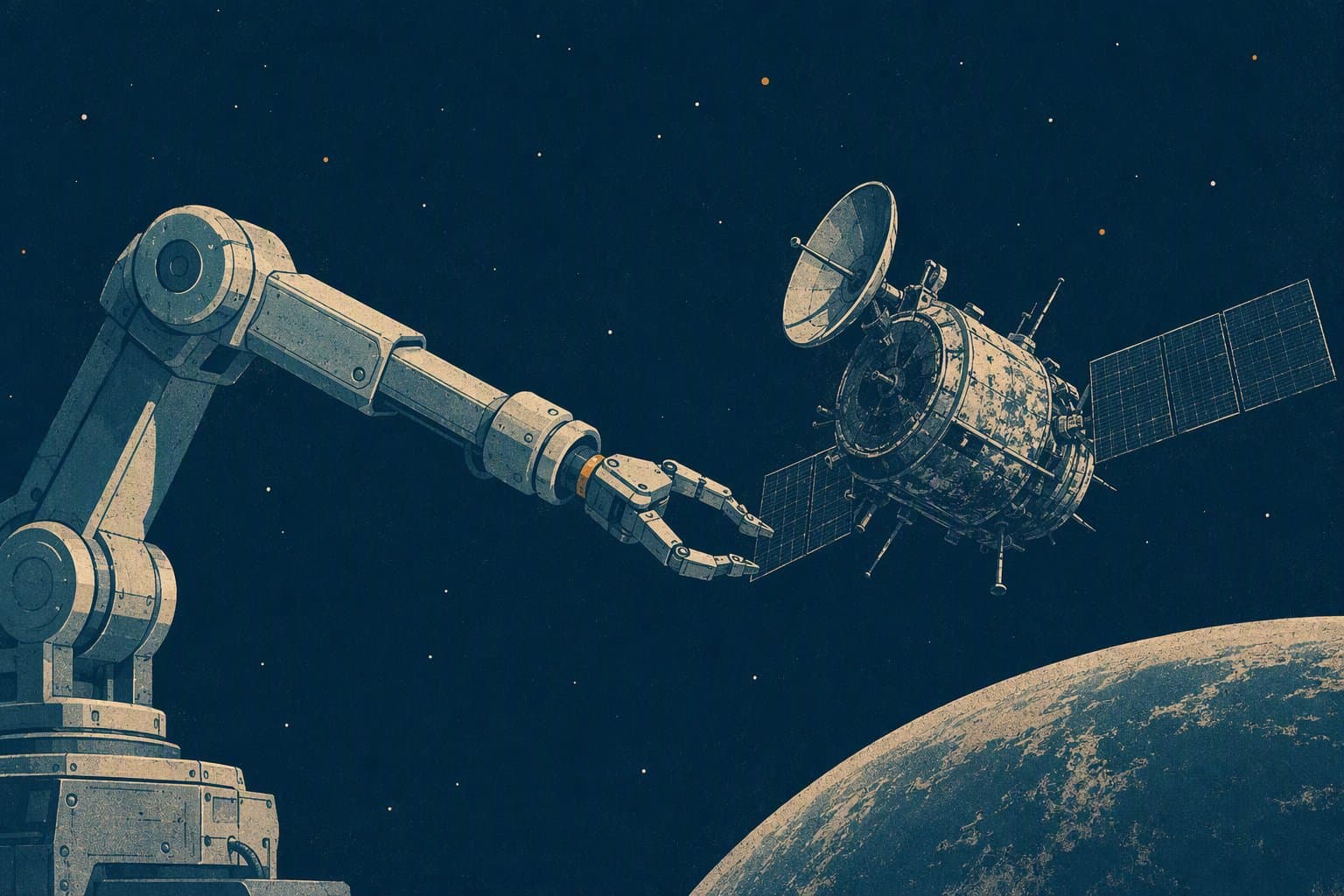
Northrop Grumman has completed a mission demonstrating the capability of its air-launched Pegasus rocket to support satellite servicing operations. The launch delivered Katalyst Space’s LINK spacecraft, which is designed to extend the operational lifespan of NASA’s Neil Gehrels Swift Observatory. This event marked the 46th flight for the Pegasus system, underscoring its role in missions requiring rapid deployment and precise orbital insertion.
The Pegasus rocket operates differently from traditional ground-based launchers. It is carried to high altitude beneath Northrop Grumman’s Stargazer L-1011 aircraft, which serves as a reusable first stage. The rocket is released at approximately 41,000 feet before its three stages ignite to place the payload into low-Earth orbit. This method allows access to trajectories that may be difficult for conventional systems to reach.
Northrop Grumman stated that the air-launch approach allows missions to be prepared and executed on compressed timelines. The company noted that the system can be assembled, tested, and launched within months, making it suitable for responsive space missions. Wes Collier, vice president of launch systems at Northrop Grumman, described the rocket as a primary option for missions requiring quick deployment.
He highlighted that the air-launch design and Orion motors enable access to challenging orbits.
Since entering service in 1990 as the first privately developed orbital launch vehicle, Pegasus has deployed nearly 100 satellites. The system uses Orion solid rocket motors for all three flight stages. The latest mission reinforces the long-standing relationship between Northrop Grumman and NASA’s Swift program.
The Neil Gehrels Swift Observatory was designed and built at Northrop Grumman’s facility in Gilbert, Arizona. It launched in 2004 with an expected operational life of two years. More than two decades later, the observatory continues to provide scientific data, exceeding its original objectives. Northrop Grumman continues to provide operational support for the spacecraft.